Recently in Energy Category

harperharvie.jpgToday is a great day for Scotland's environment and for those suffering in fuel poverty. By the substantial margin of 91 to 15 (i.e. with SNP & Labour support), Holyrood backed our energy efficiency pitch for this year's budget. 

The final motion, which passed by a similar margin, is at the end, with the Green text is in bold.

We believe £100m more a year from the Scottish Government can fund free energy audits for everyone in Scotland, and provide free insulation and financial support on micro-renewables for everyone who can benefit. 

The Green scheme is designed to deal with fuel poverty (although it obviously can't tackle all of the pure poverty element of that), improve health, cut carbon emissions, boost green collar jobs in the construction sector, bring bills down.. well, you get the idea.

We went public with the bid just under a month ago, and it appeared on page 2 of the Daily Record (sorry, proud press officer moment). Although this vote doesn't guarantee we'll see this money allocated, it's a great step in the right direction. 

Labour and the SNP get a warm welcome here for backing this call. I'd love to see more constructive politics in Holyrood on crucial issues like this, issues that should be cross-party, and perhaps MSPs have made a start today towards that.

The Tories voted against, despite Alex Johnstone's offer to consider it on the floor of the chamber. I think they could be won round, but I'll have a look at the official report tomorrow to see exactly what they said. Disappointing and inconsistent (see below).

The Liberals abstained. Now, some say the fence is just where they're comfortable, but it's pretty extraordinary on this issue. They're separately backing £800m of unfunded tax cuts, so I suppose they can't be seen to want to spend yet more money on top of that. 

It looks pretty weak, though, and when the vans go round insulating everyone's house for free (touch wood) we are likely to be pointing out that they couldn't support it. The party may claim to be Greens Lite, but the truth is they're now looking like Tories Lite instead.

The irony is this project is largely based on ideas tested out in Kirklees (watch the video) by Green councillors, working with the Tories and the Liberals. I'm staggered that they both want to be on the wrong side of the issue up here. Hopefully they'll get on board, but for now, I'll take 91-15 in favour.

Final motion as passed: That the Parliament recognises the significant role that energy efficiency and microgeneration measures could have in reducing energy costs for householders and businesses, in achieving urgent reductions in greenhouse gas emissions of at least 80% by 2050 and contributing to the eradication of fuel poverty by 2016; notes that research carried out by the Energy Savings Trust suggests that widespread installation of microgeneration could provide 30 to 40% of our electricity needs by 2050 but that current investment in energy efficiency and microgeneration measures is insufficient to achieve these goals, and calls on the Scottish Government to take steps, as set out in the Energy Efficiency and Microgeneration Bill proposals, such as fiscal incentives for householders and businesses, to ensure that microgeneration technologies become widely available and used and to consider other energy efficiency measures for new and existing housing stock to tackle fuel poverty, climate change and security of energy supply; notes the evidence given by Friends of the Earth Scotland to the Transport, Infrastructure and Climate Change Committee suggesting that an additional £100 million per annum would be a welcome change to the draft budget for 2009-10, and calls on the Scottish Government to consider a comprehensive and fully funded Scotland-wide scheme on this scale to provide energy audits, insulation provision and financial support for micro-renewables where appropriate.

Bidding up the environment.

| | Comments (0)
wavepowerstation.jpgUK Ministers have now, like the SNP, seen the light on aviation and shipping. I like to think it has something to do with the killer metaphors deployed against their previous position.

However, a Scottish Government release sent out today suggests that the Nats have again shifted their position to toughen up their proposed bill and outdo Westminster (emphasis mine):

"By including international aviation and shipping, emissions from all six greenhouse gases, and annual targets, Scotland will have the most ambitious Bill to tackle climate change anywhere in the world."

The BBC online seems to miss this aspect of the story, but I'm assured it made the broadcast coverage. Hopefully tomorrow's papers will get into the nitty gritty a bit more.

The SNP did promise annual targets in their 2007 manifesto, but if the targets they have in mind are robust and statutory ones then this is a good step in the right direction, even though the sceptic in me previously wondered if "they [took] it away just so they can look magnanimous by putting it back?"

By now we're in a bidding war, though, and the longer it goes on the more likely it is we'll end up with two really worthwhile Bills. Neither proposal is there yet, and it's now Labour's turn to come back with improvements to the UK legislation.

Here's a couple of tips for both governments for future rounds of bidding. First, the evidence is that we need annual reductions around 4.5%, not the 3% the SNP had in their manifesto. The level of reductions required has risen, too, to cope with the emissions increases over recent years.

Also, there's no plan that sets out how even 3% targets could actually be met. Both Governments are committed to continued fossil fuel dependence for export and for domestic consumption, through policies like airport and motorway expansion. Neither has much of a clue about what a low carbon economy might look like, either, or do they see how successful it could be.

This shouldn't sound too churlish. We're making progress, Ministers are starting to listen, and we've only come this far because of the legions of campaigners and individuals who've made their voices heard. Good work, y'all.
pieeyed.jpgWhen both the Scottish and the UK climate change legislation proposals first appeared, aviation and shipping were mysteriously absent. The Nats have since pledged to remedy this oversight, incidentally.

Such an exemption is clearly absurd, and I'm pretty sure that we came up with the killer line on it (specifically either Robin or Patrick - I can't remember who thought of it first).

Either way, Robin told the Chamber on September 3rd that "having a climate change bill with an exemption for air transport is a bit like having a diet plan with an exemption for pies, beans, chips and black puddings". It even inspired a charity challenge, sadly not risen to by the First Minister.

By October 16th, the Liberals had gotten in on the act. In the Commons, Steve Webb said "However, Mr Miliband appears to think he can simply ignore the hugely polluting aviation and shipping industries. It's like telling everyone you're going on a calorie-controlled diet but not counting cream cakes." Amusingly, this was billed on the party's blog as his "cream cake triumph". (thanks to Adopted Domain for the spot)

Today Friends of the Earth have in turn recycled it, in a new and more potent form, as "a drink-driving law that doesn't count whisky".

It's not clear where the Tories are on this, although the last link there implies they're also on side with the forces of good. If so, I await their press release comparing the bill as it stands to "a detox plan with an exemption for crack."


The angry mob gathered.

| | Comments (0)
Patrick Harvie and I went to Jedburgh on Monday night, where Patrick spoke in the Scotsman/BBC debate on renewables, as covered by Jenny Haworth for the Scotsman. The debate, chaired by the authoritative and engaging Lesley Riddoch, will also be broadcast on the BBC tomorrow at 2pm. 

There were about 50 people there, which was a bit disappointing, and about two thirds of them were from the very anti-wind-farm brigade, who obviously saw this as a grand opportunity to stick one up the environmentalists. There was also a wee gang from the Borders Greens, too, but they were far more polite and less rowdy, unfortunately. 

placard.jpg
The audience may have been predominantly anti-wind, but the platform was not. Patrick was joined by Duncan McLaren of Friends of the Earth Scotland, Dr Siân McGrath from Aquamarine Power (disclosure: I did some work for Aquamarine last year, so am biased in favour), and Martin Ford, the Aberdeenshire councillor who said no to Trump.

On the other side, the panel consisted of Professor Jane Bower, who has a science background as well as having worked in the oil industry, but who kept pretty quiet, and a certain Bob Graham. 

It's hard to know where to begin with Bob Graham. His past lives include the oil industry, the RAF, and being hauled over the coals for lying about renewables.

wifi.jpg
Incidentally, the main change I noticed since I last went to Jedburgh was the profusion of signs declaring Jedburgh to be "WiFi Free". Appalled, I thought the anti-turbine brigade had also taken against WiFi, which isn't entirely implausible. But no, it's just that they put the words in the wrong order, and I got good strong signal at the back of the hall.

This allowed me to fact-check Bob Graham as the event went on, which made it pretty clear why he's been in trouble with the Advertising Standards Authority.

Every single claim about the ineffectiveness of wind power he made was unsubstantiated. False. Pure propaganda. Let's start.

"The Germans have about 23,000 wind turbines. They are currently building 26 coal-fired power stations and have just commissioned three gas-fired power stations. They have seen no reduction in their emissions."

The numbers of turbines and coal plant proposals seems right, fair enough, but no reduction? Actually, since 1990 they've seen a 20% reduction in their emissions. In the debate he made the same allegation against Denmark, which was also untrue - their equivalent number is 14%.

"Scotland requires at peak times six gigawatts of electricity. If you rely on renewables to generate all of that from wind, that would reduce global levels by 0.09 of 1 per cent."

Actually, global installed capacity is 4,300 gigawatts. Sure, Scotland's 6 gigawatts aren't a huge proportion of that, but if Scotland went entirely over to clean energy, it would be .14 of one percent, almost fifty percent more than Bob Graham would have us believe. 

This is a minor point, true, especially given the overwhelming wrongness of the idea that we should do nothing because we can't solve the problem all by ourselves. What if everyone took that approach?

"I don't happen to subscribe to climate change and a lot of sensible people don't."

Name one, Bob. You don't count. But at least you came out as an utter wingnut - the live audience may have lapped it up, but the Radio Scotland audience are less likely to do so.

"Renewables can't replace base load."

Actually, this is pure fallacy. There's plenty of renewable technologies that can replace baseload, including hydroelectric, geothermal and biomass. What's more, the more diverse renewable capacity you build, the less you need other kinds of baseload. 

More generally, I find this kind of attitude exceptionally frustrating. I believe in debate, of course. I don't mind people starting with the facts and recommending different courses of action, but I object when someone's case rests on a series of falsehoods. Communities who've found turbines going up in their area are often annoyed about it, although where people have a proper stake that tends not to be the case. 

With this in mind, there are plenty of people who want to see wind power blocked, and they'll clutch at any straw going if someone suggests wind doesn't work. They'll believe the most extraordinary stuff - one audience member asked the panel why we send power through the grid to turn the turbines when there's no wind. Bob Graham didn't agree with that, or dispute it, but nonetheless he is trying to build ignorance and misunderstanding, all driven by a desire to see more nukes

As a footnote, Martin Ford is very impressive in person, even more than I expected. He's been appallingly treated for doing the right thing, and I hope John Swinney gives him what he wants above all else - a rejection of Trump's financially and environmentally unsustainable vanity project.

When Europe works properly.

| | Comments (0)
carolinevoting.jpgEarlier this week, the European Parliament backed a carbon limit for power generation in the EU, setting a figure of 500 grams per kilowatt hour. As the Guardian reports, tougher limits were proposed, but were voted down. 

Even at this level, it's the (eventual) death of un-captured coal power in Europe, and about time too.

So what did the British MEPs do? The Greens did the right thing throughout, in case you're wondering: the pic to the left is Caroline Lucas casting voting on this actual issue. Exciting or what?

The first vote was on 350g/kwh, and the three Tories voted against that, as did the Labour MEPs. The only UK Liberal voted the right way, as did the Plaid rep and also Sinn Fein. The good guys lost 24-37 this time.

Next up, 400g/kwh. Again, the Tories and Labour voted against. This one was closer, falling by a single vote. In other words, if the Committee had one more Green (or even another Liberal, Plaid or Sinn Fein member) and one fewer Tory or Labour MEP we'd have got a tougher law. So too we would have if either group had done the right thing.

All the UK MEPs then voted with the Greens on the 500g motion, and that went through overwhelmingly.

The most tiresome part of this is that Cameron pledged himself in June this year to:

"..follow the Californian model, and implement an Emissions Performance Standard. This would mean the carbon emissions rate of all electricity generated in our country cannot be any higher than that generated in a modern gas plant. Such a standard would mean that a new generation of unabated coal power plants could not be built in this country."

A combined cycle gas turbine power station emits just 320g/kwh (2003 figures given in evidence to the House of Commons). Sure, his speech cited the 500g/kwh figure, but he must know that's seriously out of date. The figure above is five years old, after all, and I have no doubt technology has moved on, bringing the current figure down even further. 

It's another bit of evidence about the limits of the Tories' new-found interest in the environment, and it confirms the equal uselessness of Labour on the same issue. Having said that, a limit is better than no limit, and to that extent I'm pleased. 

The voting numbers are here, in case anyone wants to check my rollcall (thanks to Mark Johnson for those). The Committee's affiliations are listed here for cross-reference purposes.

Sex officials in oil scandal.

| | Comments (0)
nakedoilprotesters.jpgThe BBC ran a story today about the "ethical failure" at the American Department of the Interior, entitled US oil officials in sex scandal

Earl Devaney, the investigator, found that officials rigged contracts, moonlighted as private contractors, and had sex with workers they were meant to be overseeing. All in the name of market intelligence.

The line I particularly noticed was "Sexual relationships with prohibited sources cannot, by definition, be arms-length". It might just be me, but is there a good reason why he appears to have exempted spanking?

I also mistakenly read the second word of the headline, seeing it as "oiled", while a wag here imagined a future Green government being exposed to the opposite sort of scandal, as per my title above. 
gordonchimney.jpgHats off to Greenpeace - six of their activists just persuaded a jury to acquit them of criminal damage for the graffiti to the left, on the chimney of the coal-fired power station at Kingsnorth. 

The best bit about this is that the jury effectively said "this criminal damage was an attempt to stop a more serious crime, the criminal damage caused around the world, by coal plants like this, through climate change".

It's the same sort of defence we used in our anti-GM case, but we had to wait for the appeal to get off, not least because Kingsnorth was heard by a jury, but we just had a sheriff.

If Labour or the SNP press ahead with more coal plants, they know they will be on thin legal ice now, and the potential protesters know it too.

The witnesses for this case notably included NASA's Professor James Hansen, an absolute star of early climate change science, and more detail on his evidence, including his written statement, is available here.

Greenpeace planned to write "Gordon, bin it", but I actually prefer the shorter version. Like Dennis Potter christening his cancerous tumour Rupert, after Murdoch, they renamed a grossly polluting chimney Gordon, after Brown. It's not just the dirtiest form of power generation, aside from nuclear, it's actually criminal.

Eight years and four months.

| | Comments (0)
coolingtower.jpgApparently this is a good timescale to make the changes we need on climate change. It is, of course, better known as 100 months. I'm not convinced by arbitrary deadines, and am not sure what is so vital about January 2017. 

Also, how do you sign people up halfway through? Will the domain name count down? And one final complaint: it's not clear who's behind the site, except by reading the linked-to Guardian site. 

The answer is NEF, incidentally, who I've been fond of in the past.

Having got all that snark off my chest, I did sign up, and will report back on what their monthly activity recommendations are. If they're something more substantial than urging us to turn the taps off when we brush our teeth, which surely they must be, I'll be ready to take it all back and encourage you all to sign up.
turbineanddarkclouds.jpgThe SNP set out their programme for government today, including a Climate Change Bill. Their manifesto last time was clear:

"In government we will introduce a Climate Change Bill with mandatory carbon reduction targets of 3% per annum and also set a long-term target of cutting emissions by a minimum of 80% by 2050 - above the UK target of 60%." (2007 SNP manifesto, p.21)

Annual targets are important because they make Ministers accountable. Each year they have to come before Parliament and say something like: ".. last year we achieved a 2.6% cut in our emissions, which is well below the target set in the legislation. With this in mind, we are increasing next year's budget for public transport, we will reject plans for new coal-fired power stations, and require all Scottish government agencies to switch to 100% clean energy."

The simple issue is this. Who will be in office in a year? The SNP, barring something unforeseen. Who's accountable then? They are. Who will be in office in 2050? No-one knows. Who's accountable? No-one. 

Update: Cochrane says "And, of course we won't be able to see if the Climate Change Bill has worked until 2050. I'll keep you posted."

Yet the annual targets have been dropped, and all that remains is the 80% target for 2050. Have the SNP gone native? Or have they taken it away just so they can look magnanimous by putting it back? It was even suggested to me today that annual targets would go back in exchange for our votes on Local Income Tax. I don't think so.

Not least because the votes are there in the chamber. I listened to the debate today and heard the case for annual targets made by (amongst others) Malcolm Chisholm for Labour, Alison McInnes for the Liberals, and John Scott for the Tories. 

With us, that's a massive majority for some kind of annual targets, whatever the SNP do. If they vote against, it's 81-47, assuming Margo votes for targets. So the question is this: what level should they be set at?

Let's follow the science. We back the Tyndall Centre's analysis. 90% is a better longterm target, and that means we need at least 4.5% annual cuts if we want to do our bit. 

I'm delighted to see the other parties, especially the Tories and the Liberals, really standing up for annual targets. Let's see if they back a sensible number, though.

It's over, Darling.

| | Comments (0)
peakoilchart.jpgCommentary on Darling's Guardian interview has largely (and rightly) focused on his view that the economic times faced are "arguably the worst they've been in 60 years". Faced, note: he's not talking about the current economic situation, he's talking about where it's going. The current difficulties don't look worse than the early 80s or the early 90s yet. But where is it going?

While it's often said that the first responsibility of a Chancellor is to talk the economy up, when everyone knows better it just sounds Panglossian and out of touch. So I think he's right this time, albeit for the wrong reasons. 

It's not primarily about a credit crunch. Like the dot com bust before it, we're seeing the end of a bubble spun up by market players and governments to try and fend off something worse. Its symptoms are grim, sure, but the underlying problem is that we're well into the dying days of the cheap oil economy, more commonly known as globalisation. 

Oil prices have dipped again, but as the FT says, this is just a lull in the storm. Colin Campbell and the good people at ASPO told us a long time ago what would happen, and so far it's all following their predictions. 

As global oil output starts to plateau in 2007, they said, prices will spike. Given the total dependence of our economic model on cheap oil, we'll see a serious economic slowdown. This will lead to a drop in demand for oil, easing prices. Demand destruction, they call it. However, with maximum production matching supply so closely (i.e. in the absence of a swing producer), even small threats to production will cause significant price changes. 

So far, so recognisable. We can expect the easing of prices below $100 again to lead to a small economic rally, and thus an increase in demand. My guess is that's probably not due before the spring, although I'm reluctant to make predictions. 

As demand then picks up, and as oil output starts to drop properly, probably 12-18 months from now (click on the chart above for a bigger version), we'll see another spike, almost certainly higher than the $147 peak seen in July, although that partly depends on the strength of the dollar. Cue even greater demand destruction.

No-one in government in London or Edinburgh, nor amongst their main oppositions, has any idea about how to cope with this. They're just hoping it'll all go away, and dammit, it won't. The timescales above may be out, but sooner or later it's coming. 

Darling tells the story of a member of the public who said to him "I know it's to do with oil prices - but what are you going to do about it?". His response? "People think, well surely you can do something, you are responsible - so of course it reflects on me." 

The man at the pump knows more about the problem than Darling, because he knows Darling can do something about it, a fact that seems to escape the Chancellor. Perhaps this random member of the public should do the job instead. 

Of course Darling could do something about it: he could divert spending away from wasteful projects and wars and into renewables, R&D, public transport, etc. He could set an objective of energy independence. Any politician who doesn't tell you that getting off our fossil fuel addiction is their top priority doesn't deserve your vote.

The alternatives if we don't achieve that are likely to be dire. Coal's already back with a vengeance, and there's no dirtier fuel except old car tyres, so any idea that decreasing oil use will help climate change is a pure pipe-dream. The hard right and neo-Nazis may well start to do better as the economic situation worsens. They certainly think so: see point 4 on the top link here (that's a google link -  I'm not directly linking to the bloody BNP's site!).

A lot of the goods and services we take for granted will become incredibly expensive, and fuel poverty will hit levels last seen when Good King Wenceslas famously looked out. Poverty as a whole will rise. I wouldn't bet against more resource wars, either. 

There's no point worrying about it, though, when you can spend your time working to get more Greens elected instead. 

Back to Darling's interview. His economic warning has understandably overshadowed his line that "This coming 12 months will be the most difficult 12 months the Labour party has had in a generation." 

It's a pretty extreme prediction too, though. What, it'll be worse than the last 18 months where you lost every election going? Worse than a million people marching against a Labour-led imperial war? Worse, Darling, than any given part of 1978-1993?  

How has it come to this, for Labour to have no imagination whatsoever about how to use a working Parliamentary majority? Here's a tip: why don't you address the looming energy crisis with something more constructive than nuclear and coal? 

All Labour has left is angst about themselves, fear of being exiled into opposition, and fear of being shown up by the Tories. Their absence of vision is now absolute, and it does indeed sound as though Darling's had enough. Perhaps he, like his namesake from Blackadder Goes Forth, is about to go over the top

Storm clouds over McCain.

| | Comments (0)
deadendkatrinaorleans.jpgThe news that a category 3 hurricane called Gustav could hit New Orleans this week is alarming local residents

It's Republican convention week too, which is alarming McCain's team, and they say they'd postpone the balloon-drop if need be. 

Another hurricane hitting Louisiana wouldn't just remind Americans of the utter disgrace of Bush's response to Katrina: it might also close down oil extraction in the Gulf of Mexico, and remind them of how fragile and pointless a policy it is to try and drill your way out of peak oil.

Incidentally, I thought all hurricanes were female. Turns out they used to be, but since 1978 they alternate male/female each year, unless they get to Z

Brushing it under the carpet.

| | Comments (0)
kingsnorth.jpgIf there's one thing that Salmond, Brown and Cameron all agree on, it's carbon capture and storage (CCS), which allows the filthiest fossil fuel around to be rebranded "clean coal".

The theory is that you attach a big hose to a coal-fired power station's chimney, and pump the CO2 back into empty oilfields.

The Nats, Labour and the Tories think this is a magic bullet to allow business-as-usual power generation. Our position has always been "well, if you can prove it works and is more cost-effective than renewables, it's a possible transitional technology".

But the evidence is growing that CCS simply won't work. The reason is that the CO2 doesn't just magically get itself underground - it has to be pumped, and that takes more energy, specifically about 30% more coal power. 

Once you factor in the lifetime consequences of extracting, transporting and burning that extra coal, the nitrogen oxide and sulphur oxide emissions are up to 40% worse (peer-reviewed actual science) than a standard coal plant. That means more acid rain, more ozone destruction, and more water pollution.

In short, Labour, the Nats, and the Tories are going down a dead end. Shouldn't the fact that Arthur Scargill's also on their side have been a bit of a give-away? It's not as if we don't have other perfectly good and genuinely clean technologies that we could be diverting the money towards instead.

Via the excellent Gristmill.

Give away or sell out?

| | Comments (1)
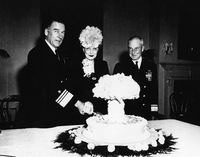
atomictree.jpgThe environment movement is still agitated about George Monbiot's article this week in the Guardian, in which he said:
"I have now reached the point at which I no longer care whether or not the answer is nuclear. Let it happen - as long as.. <caveats>" 

Leaving those caveats to one side briefly, I do recommend watching Tuesday's Newsnight (YouTube). They brought Monbiot in to defend his article, and put him up against Brian Wilson (the one who's been bought and sold, not the good one), and Jonathan Porritt, formerly of this manor

I've long been concerned that Porritt had lost his way, even before he was co-opted by Blair. Conversely, I've always admired Monbiot, ever since he used to be a regular on Newsnight as the voice of the roads protesters. Disclosure: I first met him outside the Cakehole, where he was introduced to me as Moonboot. Last year he did a fundraiser for the Party ahead of the elections too.

But I cheered when Porritt told him he'd sold out (although obviously not in the same literal way that Wilson has). Porritt made comprehensive sense all the way through, and managed to keep himself civil even as he pointed out Monbiot's gargantuan blunder.

If you want to know whether Monbiot has helped or hindered campaigns for clean energy, just look at Wilson's smug face as he awards a "slow learner's prize" to the former lion of the campaigners.

Back to those caveats. He listed four, as follows:
1. ".. its total emissions are taken into account"
2. "we know exactly how and where the waste is to be buried," 
3. "how much this will cost and who will pay;"
4. "and there is a legal guarantee that no civil nuclear materials will be used by the military."

First, "take total emissions into account" could hardly be more vague, while nuclear's carbon emissions are substantial and rising. Research shows that the the amount of CO2 emitted in the nuclear process is dependent on the grade of the ore. Current power stations emit 84-122 grams of CO2 per kilowatt hour, but the quality of the remaining uranium ore will drop (Storm & Smith 2008, 672K pdf), and as it does, nuclear's emissions will rise and overtake even gas. (Oxford Research Group paper, p.42, 1.3M pdf) 

It's not hard to see why: the processes behind the scenes are complex and energy-intensive, and so the costs will only rise as oil depletes. If you listen to the nuclear lobby, they never mention it being a finite resource, nor that it uses vast amounts of energy to extract, mill, and ship around the world. Those carbon consequences will rise even more rapidly if the world returns to nuclear, as the higher grades and softer ores deplete faster. Monbiot knows that nuclear can't wash its own face even in climate terms, so why imply it could?

Next, he doesn't insist on a safe and permanent solution to waste being developed. He just wants to know how and where it's going. A letter from Gordon Brown explaining that it's going to be three feet down in your garden in a MDF box would apparently suffice there. I know that seems unfair, but the article is exceptionally sloppy, especially given the importance of the issues. Presumably we should hear the implied word "safety" there, but how can we guarantee centuries of safety, no matter what the containment?

Third, it'll cost an absolute arm and a leg, and we're all paying, as usual, right to the death. Does that reassure you, George?

Finally, you'd trust some kind of written statement that "oh no, we won't use this for nuclear weapons, promise"? It's not like that would stop Brown/Cameron/Clegg pushing ahead with Trident renewal - the Americans would be more than happy to sell us what we need. After all, Britain was their third largest supplier of plutonium between 1967 and 1988. 

And not using our own waste would just push the prices up, surely? Trident replacement is already a tad expensive at £65 billion.

Overall, this is a weaker position on civil nuclear, let it be noted, than David Cameron's one. He said straight-out that "there shouldn't be subsidies", which effectively kills civil nuclear dead. According to the Nation, Darling apparently said the same thing in 2006, but that was then and this is now.

Also, it's not like we don't know what the answer is: 100% renewables and energy efficiency. Where nuclear already emits 84-122 grams of CO2 per kWh, wind is just 11-37g, and biomass just 29-62g (see the ORG report above). Coal, incidentally, emits around 850g, eight times more than nuclear, and thirty-five times more than wind, using the middle of those ranges. If America can go carbon-free, so can we.

Early in the debate, Monbiot says part of his solution would be to set a maximum amount of CO2 that could be emitted per kWh, and suggests "80, or perhaps 50". You do see, George, don't you, that even at the bottom end, nuclear doesn't meet that? Why have you ignored the numbers? 

Haven't you read your own articles? (that's a recommended link, though, as it does show a previous partial shift)?

I'm sure Monbiot thought he would impress onto people the urgency of stopping coal power stations with such a radical call. Perhaps he thought Wilson and Brown and the like would think "Woo, coal's so bad that even Monbiot's prepared to back nuclear - maybe we should think again about Kingsnorth?"

Pure naivety, if so. The toxic rabble in the Commons are just rubbing their hands and dreaming of nuclear directorships, present and future, where they can continue to fleece the public and pretend to fight climate change simultaneously. That's why Porritt said "sellout" directly to his face, the worst insult an environmentalist has for another, although it could be argued it was more of a giveaway than a sellout: I doubt he's actually taken the nuclear shilling.

In the interests of fairness, I'll give 2000-vintage Monbiot the last word. "It's time to shut nuclear power down, and begin the dangerous and expensive task of decommissioning Britain's most disastrous experiment."

Smog gets in your eyes.

| | Comments (0)
jetsmog.jpgSo it turns out that all that stuff we buy from China does have carbon consequences. And that - shock horror - those aeroplanes do too. If you ignore those two awkward facts you can indeed claim emissions have fallen, as Labour would like to do. 

The reality is (see that first link) that they've underestimated the carbon Britain's responsible for by a staggering 49%. 

Remember this next time you hear John Denham, David Miliband, Gordon Brown, or other Labour drones claiming that the Labour government is "leading the way on climate change". It's exactly the same sort of trick that the Tories used to pull on unemployment, and which Labour are also still doing. 

They're leading the way with fiddling the figures, that's all. And given Labour's determination to be outflanked on climate change even by the Tories, you can see why they've gone down this route. Tragic.

Pump it slowly.

| | Comments (2)
murdomacleod.jpgSo Murdo MacLeod, Scotland on Sunday's longstanding political correspondent (and tech correspondent, and Gaelic correspondent, well you get the picture), had his leaving do last night.

Drinks were taken, more by some than others (I still want to hear what Mao's point was, Mark).

Murdo's away to work for a substantial oil company in Kazakhstan, and despite him being the bane of my life when I worked for the Parliament's first two Presiding Officers, I'll miss him.

When I say "bane of my life", what I most obviously mean is this article, which appeared ten days after I started work in Parliament.

It was factually correct, except for the species of oak, their colour, the number of them, the cost (massively less), their likely country of origin, the status of contract negotiations at the time. Oh, and the final price of the project, which sadly went a little higher than £280m while I was there.

Update: sources close to Murdo have made clear that this piece was based on dodgy information from a previously reliable former source. And that the subs might have had a hand in it too.

Anyway, back to oil. I corrected his impression that his new employers and my current employers have, shall we say, divergent interests, though. Pump it slowly, I advised him to tell them. If we burn all our remaining stocks of oil and gas more slowly, it'll have less of an impact on the climate. Oh, and his bosses will make shedloads more money if they hang onto what's left of their reserves until prices hit $500 a barrel or more.

I understand they are already aware of this issue, and I'm hopeful that they'll come to the same conclusions I did. Sorry, Gordon.

Tomorrow's activism today.

| | Comments (0)
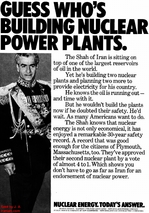
TomorrowsEnergy.jpgAstroturf is what it's called. Fake grass roots. Corporate shills, masquerading as locals. This tactic evolved into misleading pseudo-research bodies, funded the same way; by the tobacco lobby, the oil industry, the nuclear lot, anyone utterly unpalatable.

So why not turn the tables on them? Greenpeace did. (via the secretly optimistic Suitably Despairing)

kingfahd.jpgSo we're on the cusp of the post-oil age, as you know. 

There are questions to be answered, like "will we prepare for it properly, or persist with business as usual as long as possible instead". But sooner or later, that's what's happening.

Which would mean we'll no longer be dependent on the Saudi despots for our energy. Unless Gordon Brown has his way, sadly. 

In what might be the most incompetent decision of his brief premiership, he's trying to get us to invest in their dead-end dinosaur wine, while giving them a share of our endlessly productive renewables.

The current failure to prepare for post-oil economics (the opposite of masterly inactivity) means we may have to go cold turkey on fossil fuels. While having made ourselves economically dependent even for our own wind power.

Update: a similar assessment has been made elsewhere of the Bush policies.

peakoil.jpgWhen you understand the way the oil industry works, and the fact that the cheap oil era is over, it changes the way you read the news. 

Oil output is more or less at peak, the point at which about half of it has been used up, and that means production's levelled off ahead of a more or less steep decline. 

For instance, this weekend's SoS noted that "World oil production has stalled at about 85 million barrels a day since 2005", while at the same time not poking fun at Ministers from oil consuming nations who called for extraction to increase. 

Fellers, it can't, because you're at the peak. There's nothing you can do, even with a blowtorch. Even if you could get more out in the short term, through secondary recovery or similar techniques, it'd just make the decline sharper and more painful.

Actually, what they should be doing is listening to the Libyans, whose oil chief said yesterday "The easy, cheap oil is over, peak oil is looming". 

So the question for leaders, including Salmond, is this. Pretend we can get by on business as usual for generations to come, or prepare for a post-oil economy?

Kez gets it.

| | Comments (0)
Of the various Holyrood bloggers, three stand out for me.

Calum The Nat along the corridor, lover of motorways above all.
Scottish Tory Boy, whose site curiously shows him to be closest ideologically to Obama.
Kez Dugdale, who is far too consistent and principled to be in Labour much longer.

I don't know of any Liberals here who blog, but any tips on that front would be appreciated.

kez.jpgAnyway, this is about Kez. She came along to the Scotsman debate previously discussed here. In a post on oil earlier this week she not only compared Alex Salmond to JR Ewing, which I love, especially with the pic chosen, but also praised one of Patrick's contributions to that Scotsman debate - the idea that we should be independent from oil, not try to build independence on oil.

Indeed.

She also listed some sensible things the Nats could be doing, including investing properly in public transport. And then notes that instead Salmond's "actively opposing the Edinburgh trams whilst building roads, bypasses, motorways and blocking rail expansion."

So when you get back from your holidays, Kez, let's talk about which roads, bypasses and motorways we think Salmond should scrap. And you've been flagged as "future Green".
empty.jpg.. please make it this, to George Monbiot's open letter to the Saudi monarch. It's an excellent summary of how utterly disjointed, contradictory and cynical Government policy is on energy (and yes, Government here means SNP as well as Labour).

High fuel prices are, as we've long said, a blunt instrument when it comes to reducing emissions. Unlike smarter policies, such as personal carbon trading, localising planning to design out car dependence, higher prices do hit the poor.

Today's American media shows very clearly the effects of price rises (if the NYT asks for a login, go here):
1. Trucking in decline as freight moves to rail.
2. Flying in decline. Americans would be moving to rail if passenger services hadn't withered.
3. Car use in decline, buses and light rapid transit on the up.

A lower-carbon lifestyle is coming, like it or not. The question is, do you want governments that pretend we can reduce oil prices in the short term, and which keep planning new roads and economic models dependent on cheap oil in the long term? Or do you want governments which have the ideas to make that low carbon economy a strong one, building up the appropriate new industries, and promoting the infrastructure needed for life after cheap oil?

Reviews and attempted rebuttals of Monbiot's arguments in the comments please.

About this Archive

This page is a archive of recent entries in the Energy category.

Edinburgh Council is the previous category.

England and Wales is the next category.

Find recent content on the main index or look in the archives to find all content.